When disaster strikes a country—a hurricane, flood, fire, or massive power outage—the American Red Cross is one of the first to come to the rescue. It is not just a charity, but an entire ecosystem with thousands of volunteers, logistics centers, digital analysts, and medical professionals. But what happens behind the scenes? How is this rescue service, capable of responding in a matter of hours, organized? This article presents real facts and little-known details about the work of the American Red Cross.
Mission and scope of activities
The American Red Cross (ARC) is a national humanitarian organization founded in 1881 by Clara Barton. It operates under the charter of the US Congress and is responsible for preparedness, response, and recovery from emergencies, both within the country and abroad. Each year, the ARC responds to more than 60,000 incidents, ranging from house fires to natural disasters.
Blood collection service and medical support
The ARC provides about 40–45% of all donated blood in the United States. Blood is collected at mobile and stationary stations, undergoes rigorous testing, and is delivered to thousands of medical facilities. Volunteers and staff are responsible not only for collection but also for logistics: in critical cases, delivery is carried out by air and between states.
Logistics and internal support
While rescuers work on the front lines, behind them is an army of coordinators and logisticians. These specialists ensure the delivery of equipment, fuel, mattresses, medicines, generators, and food. For example, in Missouri, volunteers maintain the vehicle fleet and repair buildings, while in New England, Red Cross staff perform carpentry work to ensure that evacuation centers are ready.
Disaster Action Teams (DAT) — rapid response teams
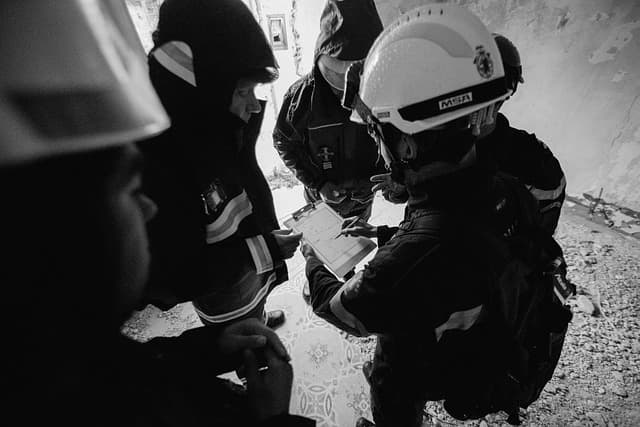
DATs are local rapid response teams that are ready to respond to emergencies 24 hours a day. They are the first to respond to fires, explosions, landslides, or floods. Volunteers distribute warm clothing, food, and temporary housing and help victims recover, both emotionally and materially.
Digital Operations Center
ARC uses technology to monitor the situation in real time. During Hurricane Sandy, Red Cross analysts tracked social media posts, located victims, and directed aid based on geolocation. This is a new level of interaction with the population — fast, flexible, and based on big data.
Education and international aid
Millions of people receive first aid and survival skills training every year thanks to the ARC. The organization also supports the US armed forces and their families, and cooperates internationally with the IFRC — the International Federation of Red Cross and Red Crescent Societies — in hot spots around the world.
Conclusion
The American Red Cross is more than just an organization: it is an aid infrastructure managed by thousands of professionals and volunteers. Its work is not limited to high-profile events: behind every rescue is the invisible work of dozens of people, coordination, technology, and dedication. When the world falls apart, they are the ones who help rebuild it.